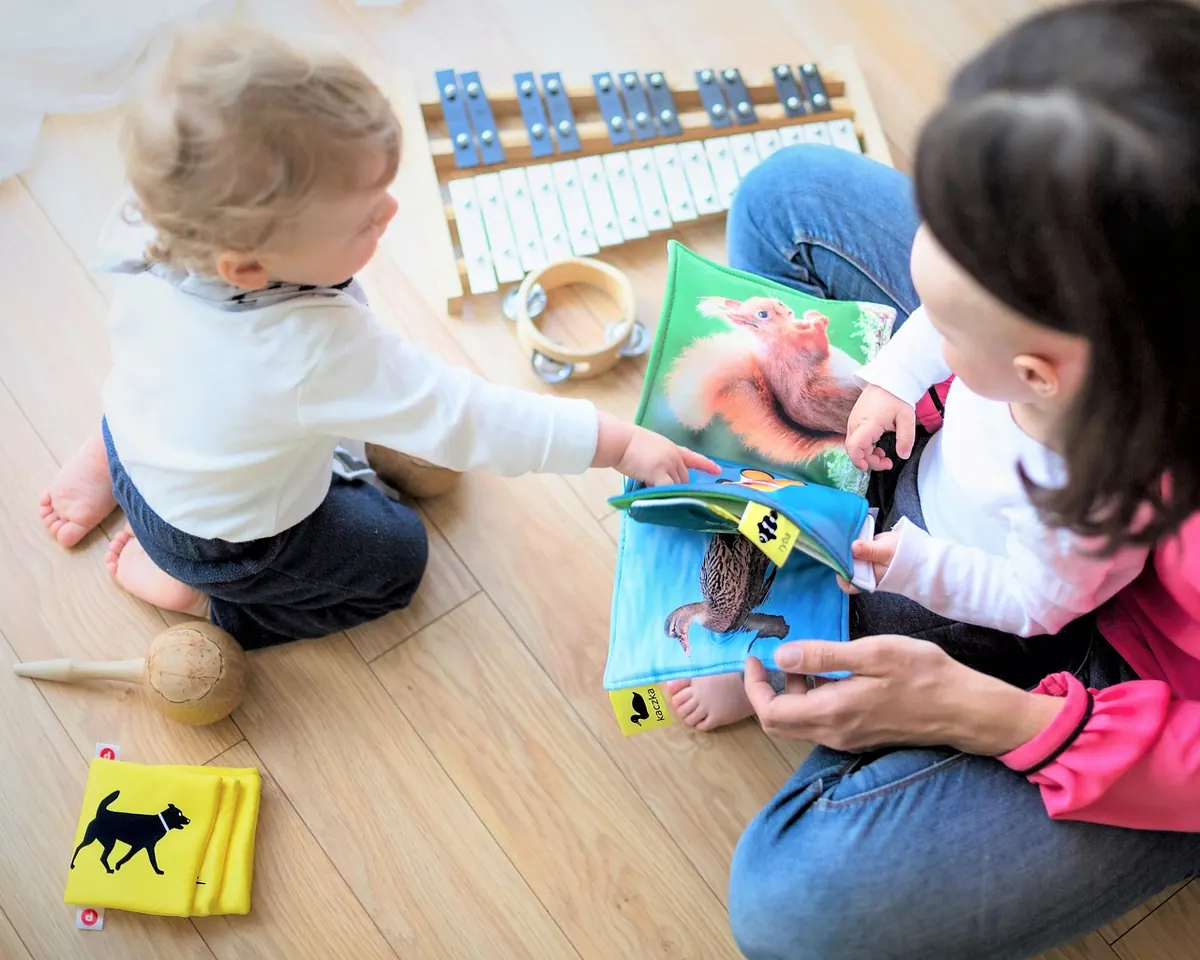
The speech therapist zips up her bag, the front door clicks shut, and you are left in the kitchen with a sink full of dishes and a child who just said "ba" for the third time. That ordinary moment is where most language happens. Sessions matter, but they fill a sliver of the week. Speech and language grow out of hundreds of small exchanges a day — the ones you are already having while you cut toast into triangles and wrestle a small person into a coat.
Children learn the words they need. A picture of a duck on a card is abstract; the duck bobbing in the bath that has to be handed back is urgent. Routines are also predictable, and predictability is a gift — your child knows what comes next, which leaves attention free for the words attached to it. Same cup, same song, same order, every time.
You do not need a scheduled twenty-minute session with a timer. Short, frequent, warm exchanges beat one long drill. Five good minutes at breakfast does more than an afternoon of quizzing.
Sitting across from each other with food in the middle is one of the best setups you will get all day. Use it.
Say what you are doing in short phrases: "Cutting the banana. Banana's slippery." Then stop. A stream of questions — what's this, say banana, can you say it — puts a child on the spot. Comments invite a response without demanding one.
Hold up two things and wait. Yoghurt or crackers? Choice creates a reason to communicate. A reach, a point, a sound, a sign — all of it counts. Take it, and say the word back: "Crackers. You want crackers."
After you speak, count to five or ten in your head before filling the silence. Many children need extra time to process a question and plan a response, and a quick "come on, say it" takes away the very pause they needed. If nothing comes, model the word once, calmly, and move on.
If your child uses sign language, pictures or a speech device, treat those as communication rather than a stopgap. Having a reliable way to ask for something now eases frustration while speech is still developing. Ask your speech therapist which signs or symbols to pair with the words you use at home, and follow their lead.
Warm water slows everyone down, which is exactly what you want. Name body parts as you wash them, add sound effects (splash, whoosh, pop), and use position words as you pour: in, out, up, down, all gone. In the bath, your child is a captive audience with little competing for attention.
Dressing is a script you repeat twice a day. "Arm in. Other arm. Sock on — one, two." Pause before the last step of anything predictable and let your child fill it in, even with a look or a sound. Mirror time afterwards is free speech practice: pull faces, copy sounds, name what you see.
Get on the floor and copy what your child does with the blocks or cars. Copying puts you inside the game instead of hovering over it. When they say something — "car" — add one word and hand it back: "Blue car." One word, not a full sentence. If they say nothing, describe what they are doing: "You're pushing it. Fast!"
Anticipation games earn their keep: peekaboo, rolling a ball back and forth, "ready, set…" with a long pause before "go!" The pause is the invitation. Try leaving something out, too — the puzzle piece just out of reach, a paintbrush with no paper — so your child has a reason to ask, point, or protest. Keep it light. The moment it feels like a test, stop.
The book your child asks for forty times is doing more work than the new one on the shelf. Repetition builds the pattern, and the pattern makes prediction possible. Read the same story and pause before the end of a familiar line: "Brown bear, brown bear, what do you…" Then wait. Songs work the same way — the same two or three, with actions, slow enough to join in. Keep signs, pictures or a device within reach during books and songs too, not just at meals.
Stick this on the fridge if it helps. You do not have to do all twelve in a day; three is plenty.
Pick the routines you already do — meals, bath, the walk to the car — and decide to be a little more talkative during them. That is the whole plan. Fifteen scattered minutes of real back-and-forth is worth more than a formal session you dread, and it fits into a day that is already full.
Two things are worth watching. If your child is not turning toward sound, not responding to their name, or you suspect hearing is playing a part, raise it with your speech therapist or doctor and ask about a hearing check. And if progress stalls for several months, or the strategies you were given no longer match your child's age, book a review rather than pushing harder at home. Home routines support therapy; they do not replace the assessment and planning a professional provides. When in doubt, ask — that is what the sessions are for.
Photo: ParentiPacek / Pixabay
A sibling's honest account of growing up beside a brother with Down syndrome — the delayed love, the real work of...

One family's first year with Down syndrome: the early intervention team that came to the living room, the...

Day camp, overnight camp, therapeutic programs, and inclusion support each suit different kids. Here's how to...

Celebrating little ones with Down syndrome.