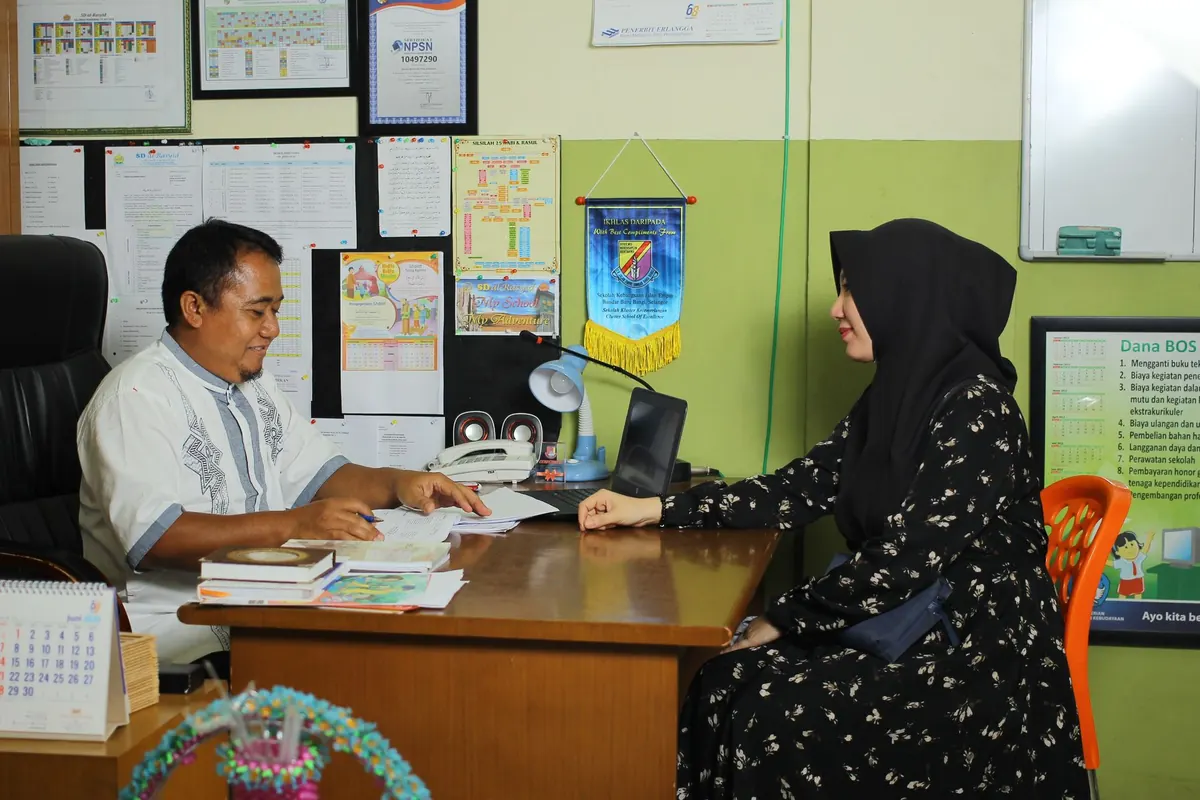
Your child's first IEP meeting arrives with a folder of paperwork, a calendar invitation, and a knot in your stomach. You sit down with a special education teacher, a speech therapist, a school psychologist, maybe a principal — people who discuss your child in terms you are still learning. Before you walk in, hold onto one fact: you are not a visitor at that table. You are a required member of the team, and you have information no one else in the room has. The real work happens in the week before the meeting.
Schools run on paper. Your job is to show up with the pieces that prove what you already know about your child.
Put it all in one binder with tabs, and bring two copies of your own summary so the team can keep one. That single page often shapes the conversation more than a fifty-page report.
Districts draft goals in educational language: reading fluency, number sense, articulation. Those matter. But your goals might be different, and they belong in the document too. Think about communication, friendships, independence, safety, and behavior — not just academics.
Before the meeting, write down three to five priorities and rank them. Then translate each one into something you could actually observe. "I want her to ask for help instead of shutting down." "I want him to eat lunch with classmates instead of alone in the resource room." "I want her to use the bathroom independently by spring." Specific, observable goals give the team something to build and give you something to measure later.
If your child is old enough, ask what they would want to change about their school day. Even a seven-year-old has opinions about noise, seating, and who they sit with.
Accommodations change how your child learns; modifications change what they are expected to learn. Both can appear in an IEP, and both should be concrete.
For each item you request, ask who provides it, when, where, and how often. Vague promises fade quickly; written minutes and settings do not.
You do not need to know everything. You need to ask good questions and take notes on the answers.
If an answer is confusing, say so. "Can you explain that in plain language?" is a perfectly good response, and you can ask the team to pause while you write it down.
Federal and state rules vary, so read the procedural safeguards notice your district gives you, or ask a parent advocate or disability rights organization to walk you through it. In general, you can request a copy of the draft IEP before the meeting, bring anyone you want with you, ask for evaluations, and take the document home before signing it. If something in the final version does not match what was discussed, ask for the correction in writing. This is general information, not legal advice — for disputes, get guidance specific to your situation.
You are the only person at that table who has known your child since day one. That is expertise, and it counts.
Print two copies of your notes. Bring a pen, a highlighter, and water. Arrange childcare if you can so you are not managing a toddler while reading goals. Consider asking a friend or partner to sit beside you and write things down while you talk. Plan something gentle for afterwards — a walk, a coffee, a phone call to someone who gets it. These meetings are emotionally heavy even when they go well.
Within a few days, request the finalized IEP and read it start to finish. Highlight every date, service, and responsible staff member. Then start a running log: what is working, what is not, and what you want to raise next time. By the second meeting, you will not be the parent learning the rules. You will be the parent with a binder, a plan, and a clear sense of what your child needs.
Photo: Rasyid Ahmad / Pexels

A sibling's honest account of growing up beside a brother with Down syndrome — the delayed love, the real work of...

One family's first year with Down syndrome: the early intervention team that came to the living room, the...

Day camp, overnight camp, therapeutic programs, and inclusion support each suit different kids. Here's how to...

Celebrating little ones with Down syndrome.